
GET STARTED TODAY
Why wait another day?
Discover how we help children develop skills and attributes that are important for future happiness and success.
Come visit us and learn more.
Book A Tour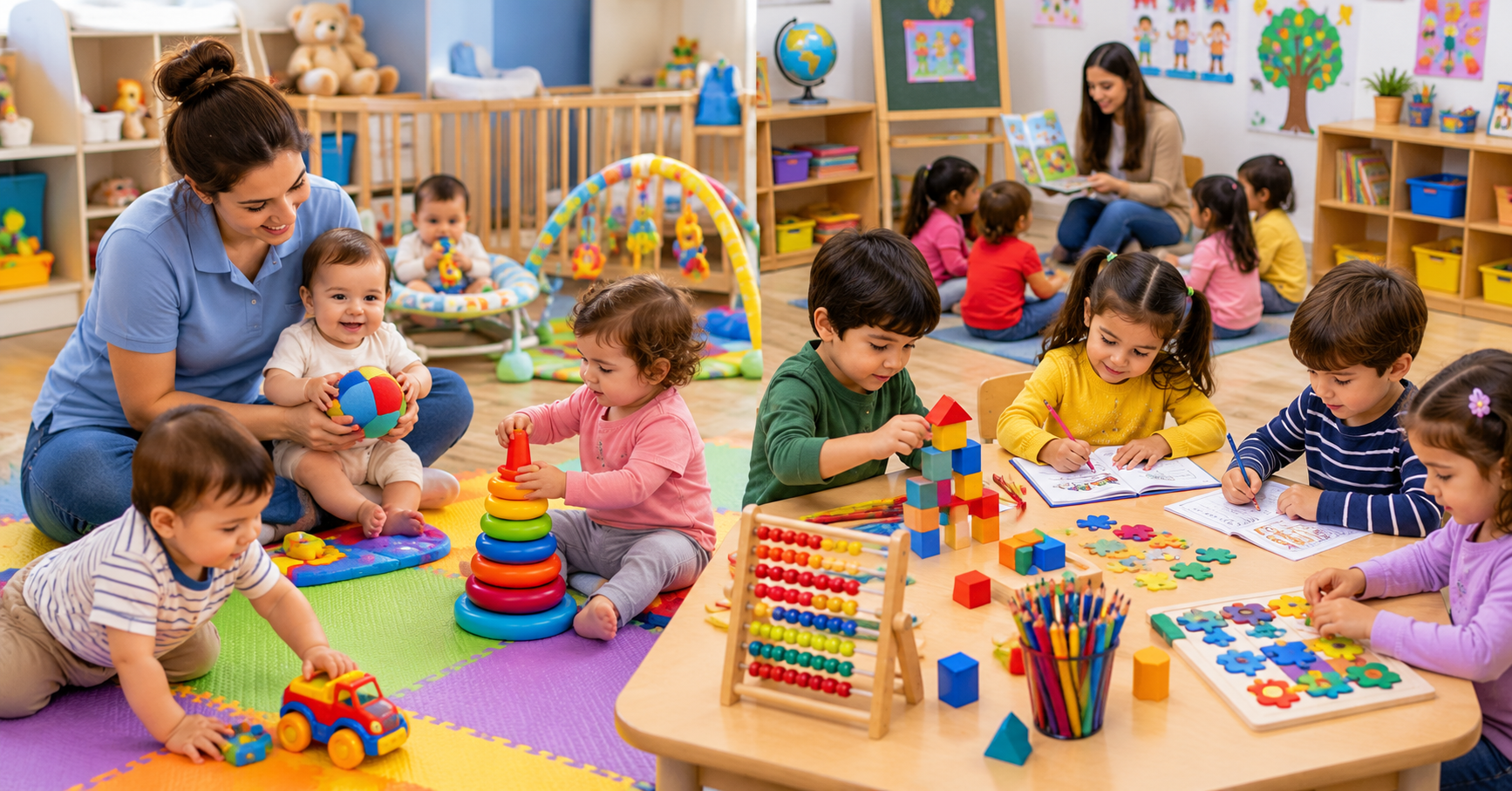
Selecting the right early learning environment always lays the foundation for your child—it is only natural to compare daycare vs preschool. Parents look at these options and usually choose between two main places. Both daycare centers and preschools offer fantastic support for busy families. However, they serve very different purposes during a child’s early years. They focus on distinct combinations of daily care, fun playtime, and early learning. Understanding how each system works helps you cut through the confusion. This helps you pick a space where your child will truly grow.
The main differences between these two choices come down to:
Daycares focus on full-day care and flexible schedules. Preschools focus more on early learning.
Age groups also set them apart. Daycares welcome tiny infants and toddlers. Older children are typically preferred at preschools for their ability to handle more structure. There are also different types of staff qualifications, and preschools may have special qualifications for staff members, such as requiring early childhood development degrees.
Daycare provides full-day care for working parents. They know what an average working week is like. For this reason, they open their doors early in the morning and close them late in the afternoon. They tend not to close for summer or winter breaks.
Instead of strict daily lesson plans, daycares focus on overall care and healthy routines. So they do have some fun things in there, such as story time, songs and simple crafts. Staff maintain regular napping, feeding and supervised free play times.
Daycares also tend to mix different ages together. They often have rooms with a wider age range. This enables younger toddlers to learn from their older peers. Some daycares take infants as young as a few weeks. They are well-trained in providing continuous warm care to infants.
Preschools serve as an introduction to regular elementary school. They are built for older toddlers and young children. These kids are ready to experience a more organized, group learning environment.
A typical preschool day follows a specific educational plan. Some schools use unique teaching styles. You can find independent, hands-on learning methods at New Horizons Montessori. Classrooms that let kids explore at their own pace often build incredible confidence early on.
Consider your child’s developmental stages and skills when deciding between a child care vs preschool program. For kids under three years old, the play-filled environment of a daycare is usually best. They are able to play with other children without being locked into a scheduled set time.
Around age three, a child’s needs begin to change. They start playing together with friends and asking endless questions. They also want to do things by themselves. Preschools take advantage of this shift. The organized day challenges their memory. It teaches them to solve problems and grows their attention span.
Practical logistics play a massive role in your final choice. All families have to consider both work life and their financial situation when managing their households.
For parents who have regular office hours, a short preschool day can become a puzzle. This is an issue that daycares handle pretty easily because they are able to run their entire day in one spot.
Costs vary quite a bit between the two options. Daycare prices stay steady. However, they can cost more overall because you pay for more hours of care each week, all year long. Preschools might charge a higher hourly rate because they hire specialized teachers. However, the hours are shorter and follow a nine-month school calendar. Because of this, the total monthly bill might look different.
Each route has its ups and downs. When you see all the points clearly, you will understand which one best fits your family.
Daycares offer amazing reliability. They care for children from infancy through the toddler years. Many locations even provide all daily meals and snacks. On the downside, they place less focus on school prep. They may also experience increased employee turnover. Drop-off times are slightly busier and louder than usual.
The answer to the question of daycare vs preschool is not one-size-fits-all. Both options provide children with loving, secure surroundings in which they make friends. They also help kids grow confident and learn new things. This should ultimately be based on your child’s personality. Think about your work schedule and how your child learns best.
Yes, there are families that use a combination of the two. They bring their child to a preschool program in the morning. After that, it is an after-hours daycare.
The majority of children transition at 3–4 years when they begin to like playing in groups.
Daycare ratios vary based on age and are very low for babies. They are sometimes matched 1 adult to 3 infants. Preschool ratios for older kids usually range from one teacher for every eight to twelve children.
Discover how we help children develop skills and attributes that are important for future happiness and success.
Come visit us and learn more.
Book A TourVisit the school | Meet the team | Let us get to know you and your child
Partner with educators | Be involved | See your child grow
Skills for today and tomorrow | Happiness and success for life