25 Years of excellence in education and child care.

Benefits of Keeping Your Child in Montessori Kindergarten

Choosing a Montessori kindergarten for your child is the best thing you can ever do. This single year is where everything clicks. Many parents consider transitioning to a traditional school for kindergarten. This last year builds on previous learning to create “confidence” and “real leadership”. 

Enrolling your child gives them a beautifully structured space designed to build independence. During this pivotal year, children move from concrete objects to abstract thinking. They stop just absorbing facts and start mastering math, language, and science. This smooth transition prepares them perfectly for every future academic challenge.

Why is the Third Year in the Montessori Cycle So Important?

The early childhood classroom works as a three-year cycle for ages three to six. This year of kindergarten is the highlight of the experience. Your child sees older children and learns the routines of daily life during these first two years. They assume the role of class leaders when they reach age 5. This shift changes everything.

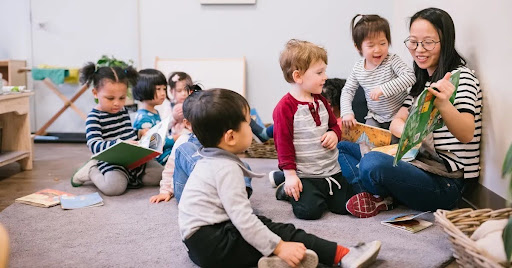
In this mixed-age setup, your child is not just another student. They help younger classmates tie their shoes and show them how to use materials. They model kind, positive behavior every day. You cannot duplicate this leadership aspect in a traditional room where every kid is the exact same age. Teaching a concept to a younger friend forces your five-year-old to master the concept themselves. It builds a deep sense of capability.

How Does the Curriculum Boost Academic Success?

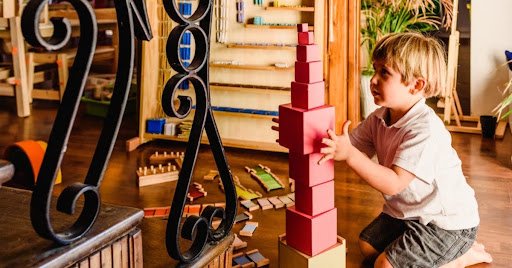
The special hands-on objects are used in Montessori classrooms to make abstract ideas concrete. Your child can use these tools for more advanced work by kindergarten. This curriculum often goes far beyond traditional kindergarten milestones.

  • Concrete Mathematics

Children don’t learn their math facts on blank math papers. Rather, they apply the Golden Bead material to experience the difference between the unit, the ten, the hundred, and the thousand. They use these same beads to add, subtract, and multiply by 1000 in kindergarten. They observe and experience math before writing it down.

  • Reading and Writing

The path to reading is exciting and highly logical. Children first trace Sandpaper Letters with their fingers to learn letter sounds. By kindergarten, they use a Moveable Alphabet to build words and write entire stories. They express big ideas before their little fingers can even hold a pencil correctly. Most children read fluently by the end of this final year.

What Social and Emotional Wins Will Your Child Get?

The benefits of staying in this program focus heavily on emotional intelligence. A long continuous block of work is provided for each day. This freedom also helps your child learn to manage their time wisely. They select their activity, complete and clean up their own area without instruction.

  • Smart Conflict Resolution: Children learn how to voice their feelings calmly. They use a designated “peace table” to talk through issues with friends.
  • Pure Internal Drive: You will not find gold stars, sticker charts, or report cards here. Children pursue the love of discovery in its purest form, cultivating a true affection for learning.
  • True Resilience: If a child is having difficulty with a challenging task, the guide doesn’t intervene in order to fix it. Your child learns how to make mistakes and to try again.

Moving to the Next Grade

One of the biggest concerns on parents’ minds is what their child will be like in later education. The full early childhood cycle prepares children wonderfully for a Montessori First grade or any conventional school. They already have a high attention span, time-management skills, and the ability to self-regulate, so they adapt quickly to new rules. They build positive relationships with teachers.

Digital Options for Busy Families

Options have expanded for families who need extra flexibility due to travel or busy schedules. Choosing an online Montessori kindergarten program brings these student-centered principles right into your living room. These programs help you set up a great learning space at home. They provide physical learning materials and offer virtual guidance from certified teachers. Your child still gets the structured benefits of the full curriculum.

Building Independent Thinkers and Global Citizens

The main goal of this educational approach is to raise independent thinkers who care about the world. Kindergarteners take on massive classroom responsibilities. They water plants, feed the classroom pets, and prepare daily snacks for themselves and their classmates.

The geography and culture studies introduce them to different continents and traditions. They do not just memorize country names. They explore global music, art, and daily lifestyles. This regular exposure builds deep empathy and global awareness during the years it matters most.

Finding the Best School for Your Child

The best programs are those that have been around for a while and are operated by certified guides. If you’re searching for a wonderful example of a community-based school, your hunt ends here with New Horizons Montessori. When you see a real classroom, you get a better idea of why this is the perfect last year at kindergarten. Watch the children work, and you will quickly see the magic of this child-led approach.

Conclusion

Selecting a Montessori kindergarten is a strong choice, providing early learning and a solid foundation. Don’t beat the five-year-old drums and force a kindergarten transition; graduate them instead. Allowing them to complete the three-year cycle develops incomparable leadership, academic self-confidence and emotional maturity. Their independence and critical thinking will boost their success throughout life.

FAQs

  • Will my child have difficulty adjusting to a traditional school setting?

No, they get used to it fairly quickly. They demonstrate to be very emotionally resilient and well-regulated.

  • What is standard kindergarten versus this academically?

It frequently outperforms traditional schools, as five-year-old children learn higher levels of math and reading through hands-on materials at their own pace.

  • What is the point of mixed-age classrooms for children?

Their seniority gives them the chance to support the younger and teach them, thus improving their own knowledge and making themselves more confident.

  • Does my child qualify to attend kindergarten only?

Yes, children can integrate successfully with the help of a certified teacher and welcoming classmates.

Why Parents Are Choosing New Horizon Montessori for Early Childhood Education

The first few years of childhood fly by. A child’s academic future goes where their school takes them. Therefore, picking New Horizon Montessori for early childhood education is an excellent choice! This program is designed to assist your child in growing more than just being watched by a traditional daycare. A place where innocent wonder becomes confident lifelong learning.

You want your kid to enjoy learning, not to memorize facts. A special session recognises your child’s individual pace and develops practical skills. Parents all over are realizing that by switching, they can witness their children become independent and happy quickly.

Why Do Parents Choose New Horizon Montessori?

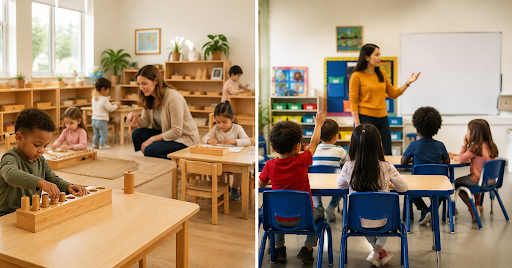
Typical preschools require kids to sit for long periods. The teacher will present a lecture, and each child will work on the same project at the same time. This school flips that old method completely upside down. Your child becomes the leader of their own learning journey.

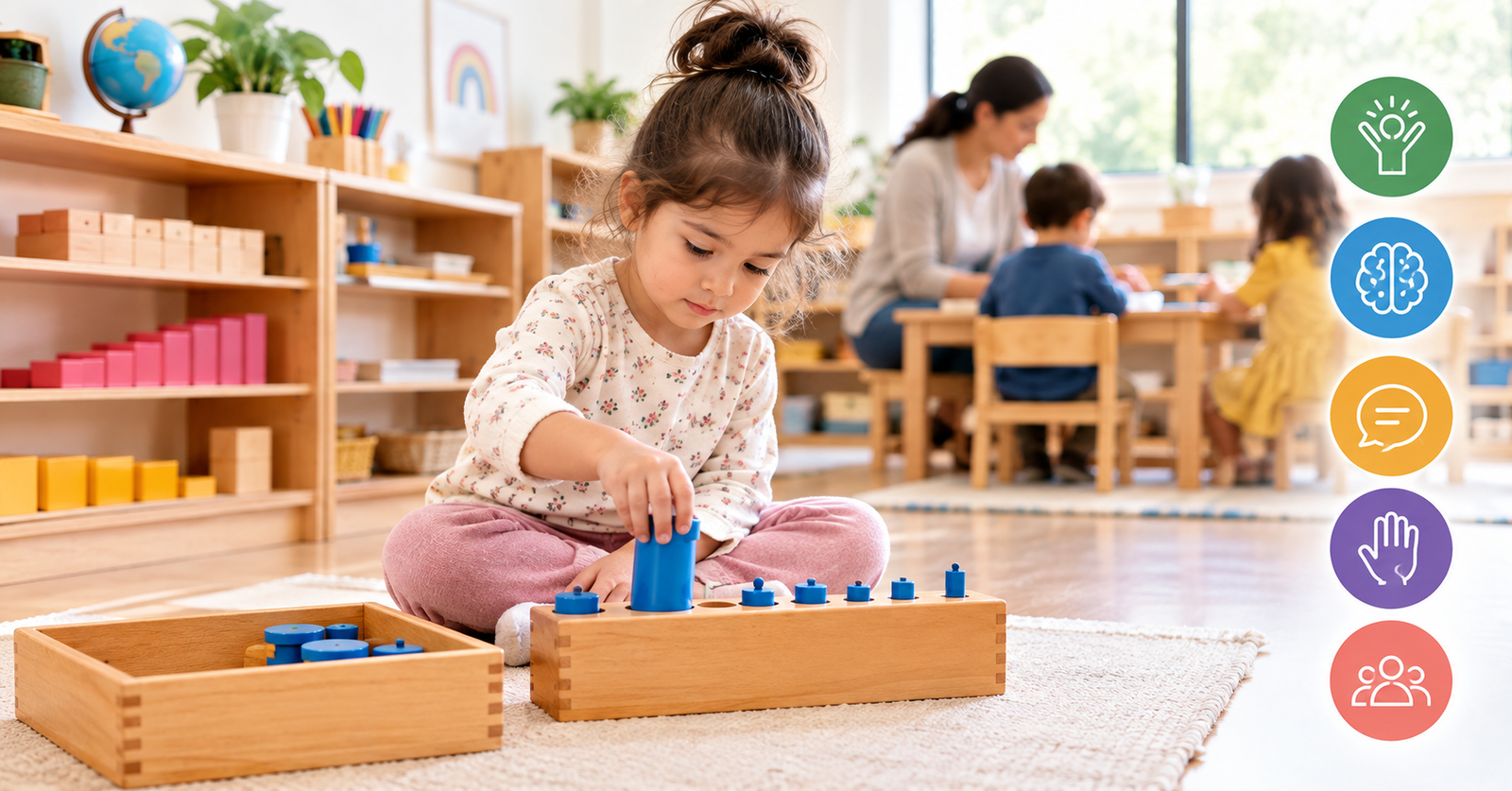
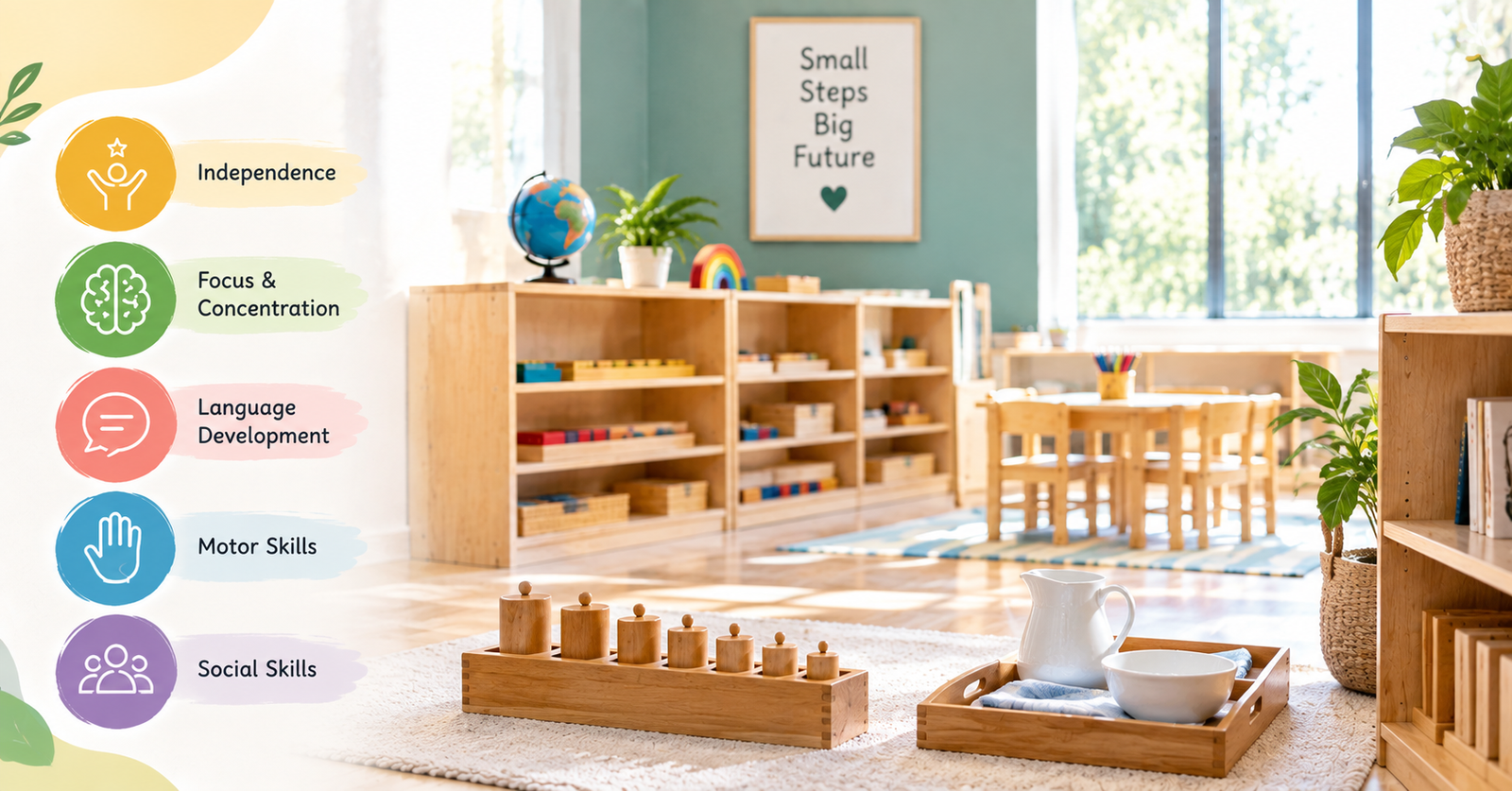
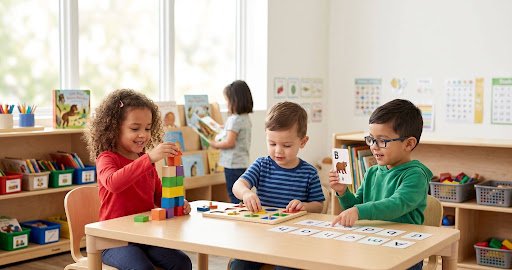
The classroom acts as a beautiful, calm workspace. Children choose their own activities from low, open shelves. They work with beautiful wooden materials instead of plastic toys. A guide watches closely and introduces harder tasks only when your child is fully ready. This gives your child a sense of ownership over their daily successes.

The Features That Make a Huge Difference

Your child will grow and flourish in their own special setting. All the elements of the room are used for a clear purpose.

A Calm Room Design for Deep Focus

The classrooms do not feel chaotic or loud. Everything fits a child’s small physical size perfectly. Your child can reach every tool, book, and tray without asking an adult for help. This freedom builds incredible focus. You will watch your child spend long stretches of time perfecting a single task.

Mixed-Age Rooms Build Strong Leaders

Children of different ages share the same classroom space. Your child will remain in this space for three years. The younger kids look up to the older ones. They learn new skills by watching them. Older children learn to advise and support their younger peers and become more confident and empathetic.

Real Life Skills for Daily Independence

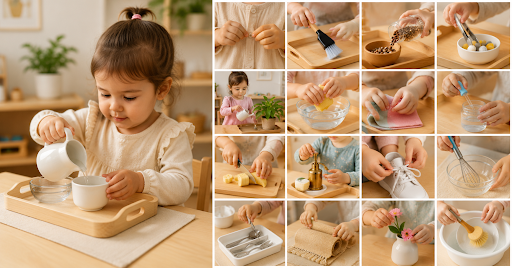
Education here goes way beyond letters and numbers. Children practice real-world tasks every day, including:

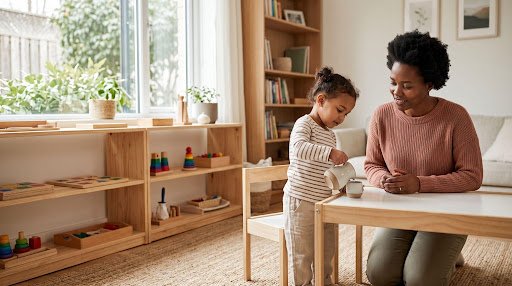
  • Being careful not to spill water while pouring carefully
  • Securing buttons, zippers and buckles.
  • Cutting up fruit into a healthy group snack.
  • Washing tables and sweeping up crumbs

You will love seeing these habits come home. You may suddenly see your child clean up and put on their own shoes without needing help.

How Your Child Grows From Toddler to Primary

The young mind takes everything in, as a sponge takes in water. The school employs certain programs according to your child’s exact development.

The Wonder of the Pre Primary Montessori Stage

Younger children learn primarily through their physical senses. During the pre-primary phase, your child uses hands-on materials to understand big ideas. They trace sandpaper letters to feel the shapes of sounds, and they hold wooden blocks to feel different weights. This physical practice makes abstract reading and math concepts easy to grasp later on.

Stepping Up to Montessori Primary Education

Your infant or toddler’s bubble brain continues to expand as they get older. They move into Montessori Primary education, where they explore science, history and geography. They don’t simply look and read about plants in a book. Rather, they dissect real seeds and learn all about them! They develop their knowledge of continents with giant world puzzle maps made of wood. Your child learns to find answers on their own.

Benefits That Last a Lifetime

Education helps determine the kind of adult your child becomes. You are building the skills that schools usually do not focus on.

  • Internal Drive: Your child works for his own personal satisfaction and not for the reward of stickers, gold stars or praise.
  • Smart Problem Solving: The learning materials show mistakes automatically. If a piece doesn’t fit, your child finds out why without a teacher’s explanation.
  • Great Social Skills: Sharing a classroom, children learn to wait in line and solve their conflicts with kind words.

Find enrollment dates, classroom hours, and book a school tour at New Horizons Montessori. Give your child the gift of a beautiful academic start.

Conclusion

Your child gets a head start in life by choosing New Horizon Montessori. You are not just choosing a preschool, you are making a choice for educational settings that nurture your child’s independence, intellect and emotional development. See your child become a self-confident learner who can complete tasks with a smile. To experience a brighter educational future, visit nhmontessori.org today.

FAQs

  • What is the experience of kids transferring to a traditional school later?

They grow wonderfully because they are very independent, love learning and know how to manage their time.

  • Do teachers actually give lessons, or do kids just play?

Guides deliver short, focused lessons to one child or small groups to safely explore new concepts.

  • How does a mixed-age classroom benefit younger children?

Younger children acquire higher-level social and academic skills quickly by observing and copying the older students.

What is the Montessori Method of Education? A Guide for Curious Parents

What is the Montessori Method of Education? A Guide for Curious Parents

In a world teeming with educational philosophies, the Montessori method stands out with its unique emphasis on fostering a child’s natural love for learning. This century-old approach recognizes that children possess an innate curiosity and drive to explore the world around them. If you’re a parent seeking to understand alternative approaches to education, the Montessori method is worth investigating. Let’s take a closer look at its core principles, classroom practices, and the potential benefits it offers for young minds.

Who Started It All? Dr. Maria Montessori

The Montessori method is the brainchild of Dr. Maria Montessori, an Italian physician, and educator who lived in the late 19th and early 20th centuries. Her pioneering work was driven by a deep understanding of child development and the conviction that children are naturally curious, capable learners when provided the right environment and support.

The Essence of the Montessori Approach

  1. Child-Centered Learning: At the core of Montessori education is placing the child at the center of their learning journey. Children are seen as active participants rather than passive recipients of knowledge. They are given the freedom to choose activities that align with their interests and to progress at their own pace.
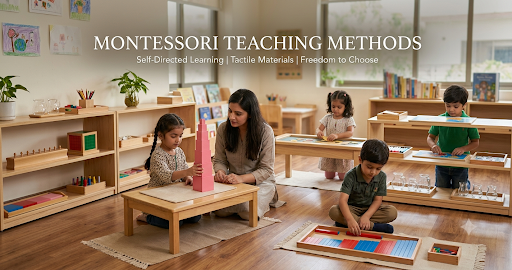
  2. Hands-On Exploration: Montessori classrooms are filled with specially designed materials that promote hands-on exploration and discovery. These materials cover areas like mathematics, language, science, practical life skills, and sensorial awareness, allowing children to learn through direct experience.
  3. Prepared Environment: The classroom itself is considered a vital tool for learning. Montessori classrooms are meticulously organized, aesthetically pleasing, and filled with child-sized materials that are readily accessible. This ‘prepared environment’ fosters independence, order, and a sense of belonging.
  4. Mixed-Age Groups: Montessori classrooms intentionally bring together children of different ages (usually a three-year span). This encourages peer-to-peer learning, with older children acting as role models for younger ones, and younger children benefiting from the guidance and support of older peers.
  5. Uninterrupted Work Periods: The Montessori approach values extended, uninterrupted stretches of time for children to fully immerse themselves in their chosen activities. This allows for deep concentration, problem-solving, and the joy of mastery.
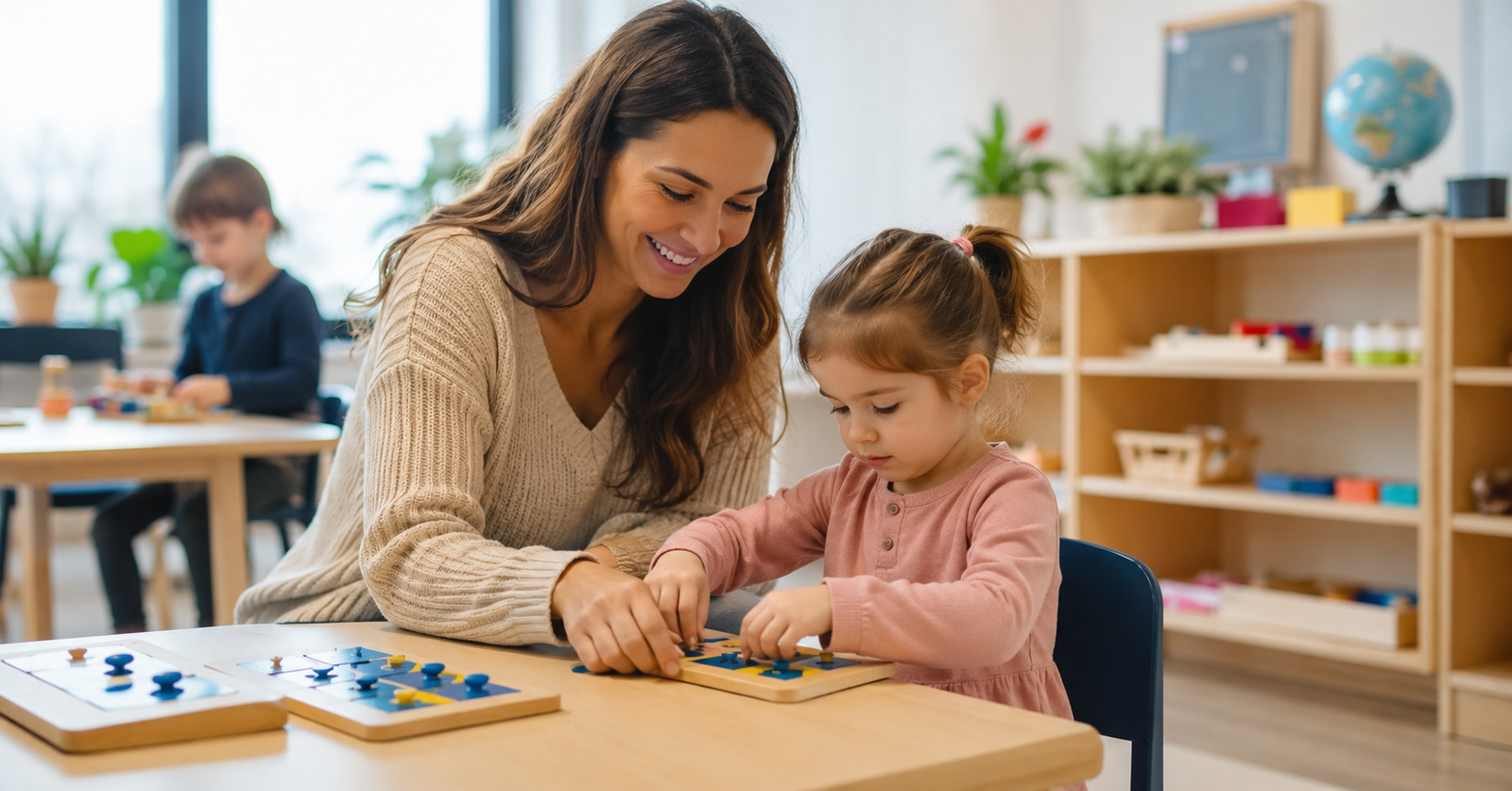
  6. The Role of the Teacher: Montessori teachers are trained as facilitators and guides. They observe children carefully, prepare the classroom environment, introduce materials, and offer support when needed. They trust in the child’s inner drive to learn and step back to allow for independence and discovery.

The Advantages of the Montessori Method

  • Encourages a Love of Learning: By allowing children to guide their own learning, Montessori ignites an intrinsic love of learning that can last a lifetime.
  • Develops Independence and Self-Discipline: Children learn to work independently, take care of their environment, and manage their time effectively, fostering important life skills.
  • Nurtures Confidence and Creativity: The freedom to explore and make mistakes develops self-confidence while open-ended activities encourage creativity and problem-solving.
  • Fosters a Global Mindset: Mixed-age groups and an emphasis on global awareness cultivate respect for diversity and a sense of interconnectedness.
  • Strong Academic Foundation: Research suggests that Montessori students often meet or exceed traditional academic benchmarks, doing so with a sense of joy and self-motivation.

Is a Montessori Education Right for Your Child?

Is a Montessori Education Right for Your Child?

Like any educational approach, Montessori isn’t a one-size-fits-all solution. Here are some things to consider:

  • Structure vs. Freedom: Montessori classrooms emphasize child-directed learning and freedom of movement. If your child thrives in a highly structured environment with clear directives, the initial transition to a Montessori setting might require some adjustment.
  • Social Development: The mixed-age grouping in Montessori classrooms fosters valuable peer-to-peer learning. However, some children, particularly younger ones, might feel overwhelmed or unsure of how to interact initially. Observing a Montessori classroom beforehand can help you gauge if your child would benefit from this dynamic.
  • Learning Style: Montessori caters well to a variety of learning styles, with its emphasis on hands-on exploration and concrete materials. However, if your child learns best through direct instruction and teacher-led activities, a more traditional approach might be a better fit.
  • Family Involvement: The Montessori philosophy emphasizes continuity between home and school. Parents are encouraged to understand the method and create a Montessori-inspired environment at home. Consider your willingness to actively participate in your child’s Montessori journey.

How to Find a Montessori School

If you’re intrigued by Montessori, be sure to visit potential schools in person. Observe the classroom atmosphere, interact with teachers, and ask lots of questions. Look for authentic Montessori programs accredited by organizations like the Association Montessori Internationale (AMI) or the American Montessori Society (AMS).

If you’re interested in learning more about how the Montessori approach could benefit your child, consider visiting New Horizons Montessori at New Horizons Montessori. Their dedicated team can provide insights and help you determine if a Montessori education is the right fit for your family.

The Montessori Legacy

The Montessori method has stood the test of time and its influence on early childhood education is undeniable. Whether you ultimately choose Montessori or another path for your child, understanding its principles can offer valuable insights into how children learn and thrive.

What are the 4 C’s in Montessori?

What are the 4 C's in Montessori?

In today’s rapidly changing world, educators and parents alike are recognizing the need for children to develop skills that go beyond simple memorization and test-taking. The “4 C’s” – Critical Thinking, Collaboration, Communication, and Creativity – have emerged as essential for success in the 21st century. The Montessori approach to education has intrinsically fostered the development of these skills for over a century, providing children with a strong foundation for navigating a complex and interconnected world.

Understanding the 4 C’s

Let’s break down each of the 4 C’s and explore how they manifest within the Montessori framework:

  • Critical Thinking: Critical thinking involves the ability to analyze information, question assumptions, solve problems, and make informed decisions. Montessori classrooms cultivate critical thinkers by encouraging children to explore concepts independently, experiment with materials, and draw their own conclusions.
  • Collaboration: Collaboration refers to the ability to work effectively with others, share ideas, delegate tasks, and resolve conflicts constructively. The mixed-age environment in Montessori classrooms provides natural opportunities for peer-to-peer learning, with older children mentoring younger ones and complex projects naturally encouraging teamwork.
  • Communication: Strong communication skills, both verbal and written, are essential for expressing oneself clearly and understanding others. Montessori language activities, from storytelling to formal presentations, nurture children’s self-expression and confidence. The emphasis on respectful dialogue within the classroom promotes active listening and effective communication.
  • Creativity: Creativity involves generating original ideas, exploring new possibilities, and approaching challenges through innovative solutions. Montessori’s open-ended materials and emphasis on self-expression provide a fertile ground for creative exploration. Art, music, and imaginative play are woven into the curriculum, fostering creative expression and problem-solving.

The Montessori Approach and the 4 C’s

Here’s how the core principles of the Montessori method uniquely nurture the development of the 4 C’s:

  1. Child-Centered Learning: By placing children at the center of their learning experience, Montessori classrooms prioritize students’ interests and encourage them to ask their own questions. This cultivates critical thinking as children learn to analyze information and form their own conclusions.
  2. Hands-On Exploration: The Montessori materials, carefully designed for specific learning objectives, encourage children to learn through direct sensorial experience. Manipulating materials, observing outcomes, and correcting their own errors nurtures critical thinking and problem-solving skills.
  3. Mixed-Age Classrooms: The diversity of ages within Montessori classrooms fosters both collaboration and leadership. Older children learn to share their knowledge and mentor younger peers, while younger children model and learn from those ahead of them. This dynamic builds collaborative skills and social awareness.
  4. Uninterrupted Work Periods: Long stretches of uninterrupted time allow children to fully engage in their chosen activities, promoting deep concentration and focus. This focused work cycle encourages independent problem-solving and perseverance, essential aspects of critical thinking.
  5. Freedom within Limits: Montessori classrooms offer a balance of freedom and structure. Children can select their activities and move around freely, but clear ground rules and expectations are in place. This fosters responsibility and decision-making skills, supporting the development of critical thinking and self-regulation.
  6. The Prepared Environment: The thoughtfully designed Montessori environment invites exploration and discovery. Materials are aesthetically arranged, readily accessible, and cater to a range of developmental needs. This environment promotes independent learning, creative exploration, and collaboration among children.

Real-World Examples of the 4C’s in a Montessori Classroom

  • Critical Thinking: A child might become fascinated with how plants grow, leading them to set up an experiment with different types of soil, light conditions, and watering schedules. Observing, recording data, and drawing conclusions about plant growth nurtures their scientific thinking skills.
  • Collaboration: A group of children decides to build a large-scale model of their community. They brainstorm ideas, divide tasks, negotiate roles, and work together to gather materials and construct their project, developing essential collaboration and leadership skills.
  • Communication: After a field trip to a museum, children practice giving short presentations about what they learned. They explain concepts to their classmates, answer questions, and expand their vocabulary related to the topic.
  • Creativity: Children use a variety of art materials to express their emotions, tell stories, or illustrate scientific concepts. Open-ended creative activities allow them to experiment with different mediums and generate original ideas.

Beyond the Classroom: Supporting the 4 C’s at Home

The Montessori philosophy doesn’t end at the classroom door. Parents can reinforce and extend the development of the 4 C’s at home through simple practices:

  • Provide Opportunities for Choice: Give your child choices throughout the day, such as what to wear, which healthy snack to have, or which book to read. This empowers decision-making skills and fosters independence.
  • Encourage Questioning: Welcome your child’s questions with enthusiasm, even if you don’t have all the answers. Consider saying, “That’s an interesting question, let’s find out together!” This nurtures curiosity and critical thinking.
  • Embrace Mistakes as Learning Opportunities: Avoid rushing to fix things for your child. When they encounter a problem, offer support and encouragement to try different solutions. This promotes resilience and reinforces the idea that mistakes are a part of the learning process.
  • Create a Prepared Home Environment: Organize a few areas of your home with child-sized materials and activities. Include simple puzzles, art supplies, or books accessible to your child This promotes independence and self-directed learning.
  • Engage in Practical Life Activities: Involve your child in simple chores like sorting laundry, setting the table, or caring for plants. These activities enhance collaboration, problem-solving, and a sense of responsibility.

The Long-Term Impact of the Montessori 4 C’s

By nurturing critical thinking, collaboration, communication, and creativity from a young age, Montessori education provides children with tools that extend far beyond their academic performance. Students who have experienced a Montessori education often demonstrate:

  • Adaptability and Resilience: They’re equipped to handle challenges, experiment, learn from mistakes, and develop effective problem-solving strategies.
  • Strong Leadership Skills: The opportunities to lead projects, mentor younger peers, and resolve conflicts in a supportive environment foster confidence and leadership abilities.
  • Effective Communication: The emphasis on clear communication, respectful dialogue, and presentations build strong verbal and written communication skills.
  • Innovation and Entrepreneurial Spirit: The creative, self-directed learning environment encourages innovation, out-of-the-box thinking, and a willingness to explore new ideas.

The Montessori Legacy: Nurturing Successful and Fulfilled Individuals

The Montessori approach offers a unique and empowering foundation for fostering essential 21st-century skills in young children. If you’re intrigued by the potential of Montessori education to nurture your child’s curiosity, critical thinking, collaboration, communication, and creativity, consider exploring New Horizons Montessori. Visit their website at New Horizons Montessori to learn more about their programs, philosophy, and how they can support your child’s holistic development.