
GET STARTED TODAY
Why wait another day?
Discover how we help children develop skills and attributes that are important for future happiness and success.
Come visit us and learn more.
Book A Tour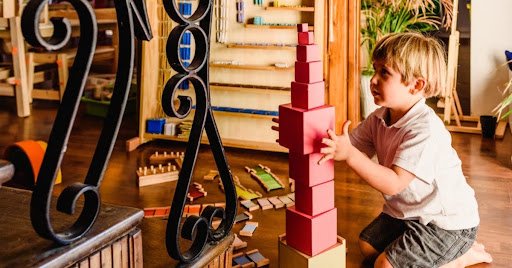
The Montessori Pink Tower is a basic learning tool in early childhood education. It consists of ten solid pink wooden cubes. Dr. Maria Montessori created this tool to help young children understand size, volume, and space. All ten blocks have the exact same color and shape. Only the size changes from block to block. This simple design helps children focus on size without any distractions. When children play with these blocks, they build hand strength and improve finger control. They also learn basic math concepts like volume and counting. In our experience, kids who use this tool understand big math ideas much faster later in life.
At first glance, these ten pink blocks look like ordinary toys. You might think kids just stack them for fun. But we see something much deeper when we watch children use them. This tool is a smart device for early brain development.
The main job of the tower is to teach size differences. Every block is a perfect cube. Every block is smooth wood painted the exact same shade of pink. Because the color and shape never change, your child focuses on one thing. They focus only on size.
This simple tool helps your child grow in three big ways:
One of our favorite things about this tool is how it teaches independence. The blocks fix mistakes for you without any adult help. We call this a built-in error control.
Imagine your child puts a large block on top of a smaller block. The error shows up instantly. The tower looks uneven and wobbles. Your child sees the mistake right away. You do not need to correct them. Your child learns by trying again and watching what happens. This process builds real confidence.
A Montessori Pink Tower lesson follows a calm and careful routine. We guide your child through simple steps to help them focus and build patience.
We often notice a deep calm come over the room during this exercise. Watching a child carefully move that tiny top block shows you how deeply this work settles their mind.
Parents often ask us why these blocks are always pink. They wonder why we do not use natural wood or bright rainbow colors.
Dr. Maria Montessori tested many different colors with young children long ago. She found that a soft pink color held a child’s focus best. It attracts their eyes without overstimulating their brain.
In authentic Montessori education, every activity connects to the next step in your child’s growth. The pink blocks bridge the gap between basic life skills and real math work.
We often see children mix these pink blocks with our brown stairs set on their own. This shows us that once kids master one skill, they naturally want to challenge themselves with bigger ideas.
Every child deserves expert teachers who understand how children learn and grow. New Horizons Montessori brings over 25 years of hands-on teaching experience to early childhood education. Our head teachers hold full credentials in the Montessori method. We create calm classrooms that build independent thinkers and happy lifelong learners.
The Montessori Pink Tower continues to be a great tool for making abstract maths a fun physical game. These blocks provide your child with the motor skills and confidence they will need in the future as they explore how to pick them up, stack them, and balance a block.
Discover how we help children develop skills and attributes that are important for future happiness and success.
Come visit us and learn more.
Book A TourVisit the school | Meet the team | Let us get to know you and your child
Partner with educators | Be involved | See your child grow
Skills for today and tomorrow | Happiness and success for life