
GET STARTED TODAY
Why wait another day?
Discover how we help children develop skills and attributes that are important for future happiness and success.
Come visit us and learn more.
Book A Tour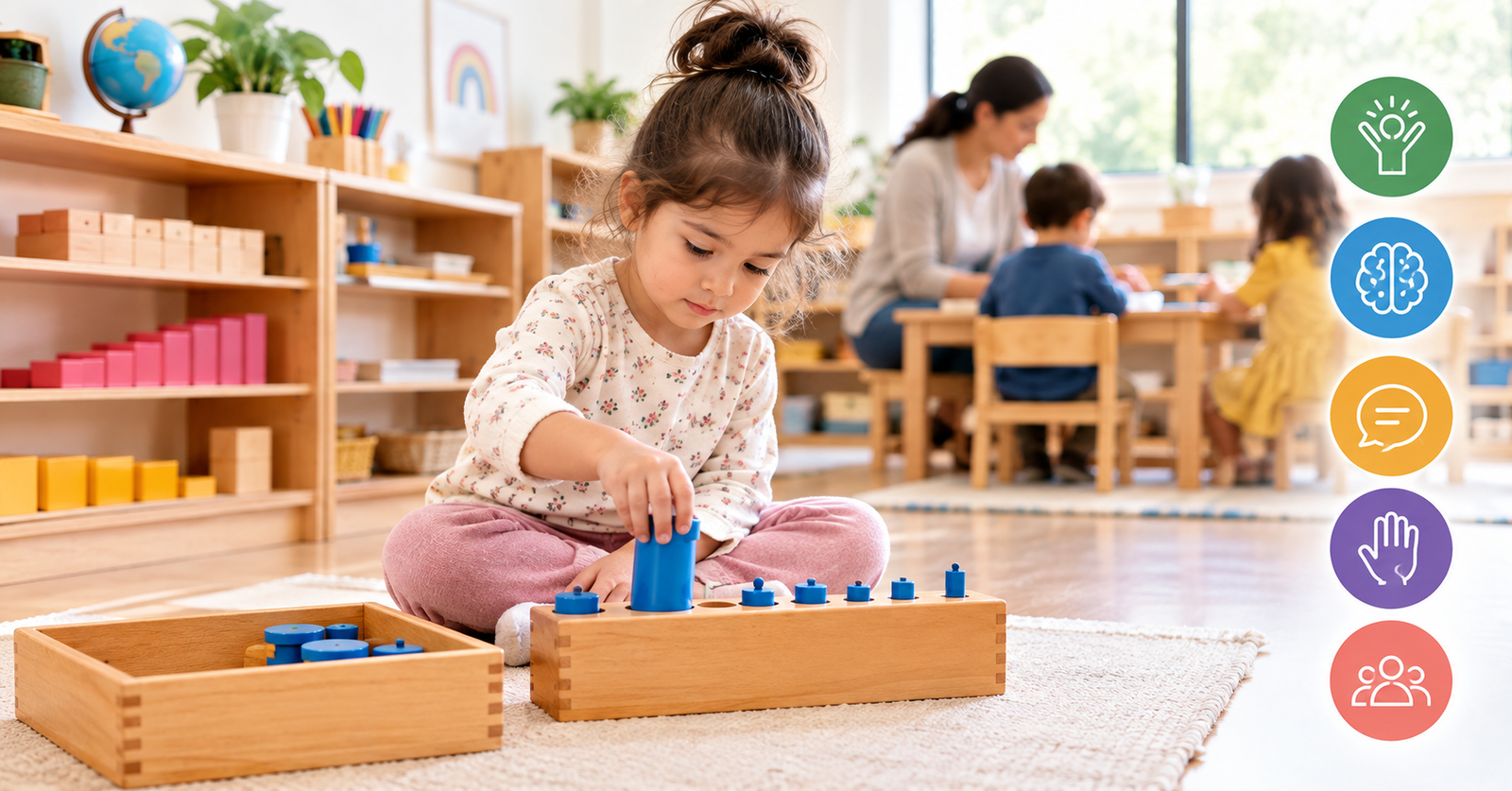
In a pre-primary Montessori classroom, your toddler will grow in ways you can see. You will see stronger independence. You will see longer focus. You will see faster language growth too. This happens because your child gets hands-on materials. They work at their own pace. Trained teachers guide them, but they don’t rush them. We have watched this happen again and again in real classrooms. A child who cannot sit together at home for a story will sit for 15 minutes with a bowl of beans. Why? It’s a task that fits in with where they’re sitting.
Consider your child’s development in the 18 months to 3 years age group. They are absorbing all they can see and hear. Maria Montessori referred to this phase as the “absorbent mind”. This is the reason Montessori begins so early.
Your child also passes through what Montessori called “sensitive periods”. These are short windows when your toddler is especially drawn to one skill, like order, movement, or language. A good classroom spots these windows and offers the right activity at the right time. Miss the window, and the same activity gets far less interest later.
Your toddler also craves order and repetition. A good classroom respects this instead of fighting it. Here’s something people miss from the outside: the shelves aren’t just storage. They’re part of the lesson. Each item has one spot. Your child puts it back before picking something new. This quietly teaches order. It teaches sequence too. And it happens long before your child can explain any of it in words. As Maria Montessori put it, children simply ask us to “help me to do it myself.”
A pre-primary room is usually split into a few clear areas.
Once parents see these areas in person, the classroom stops looking like a room full of toys and starts looking purposeful.
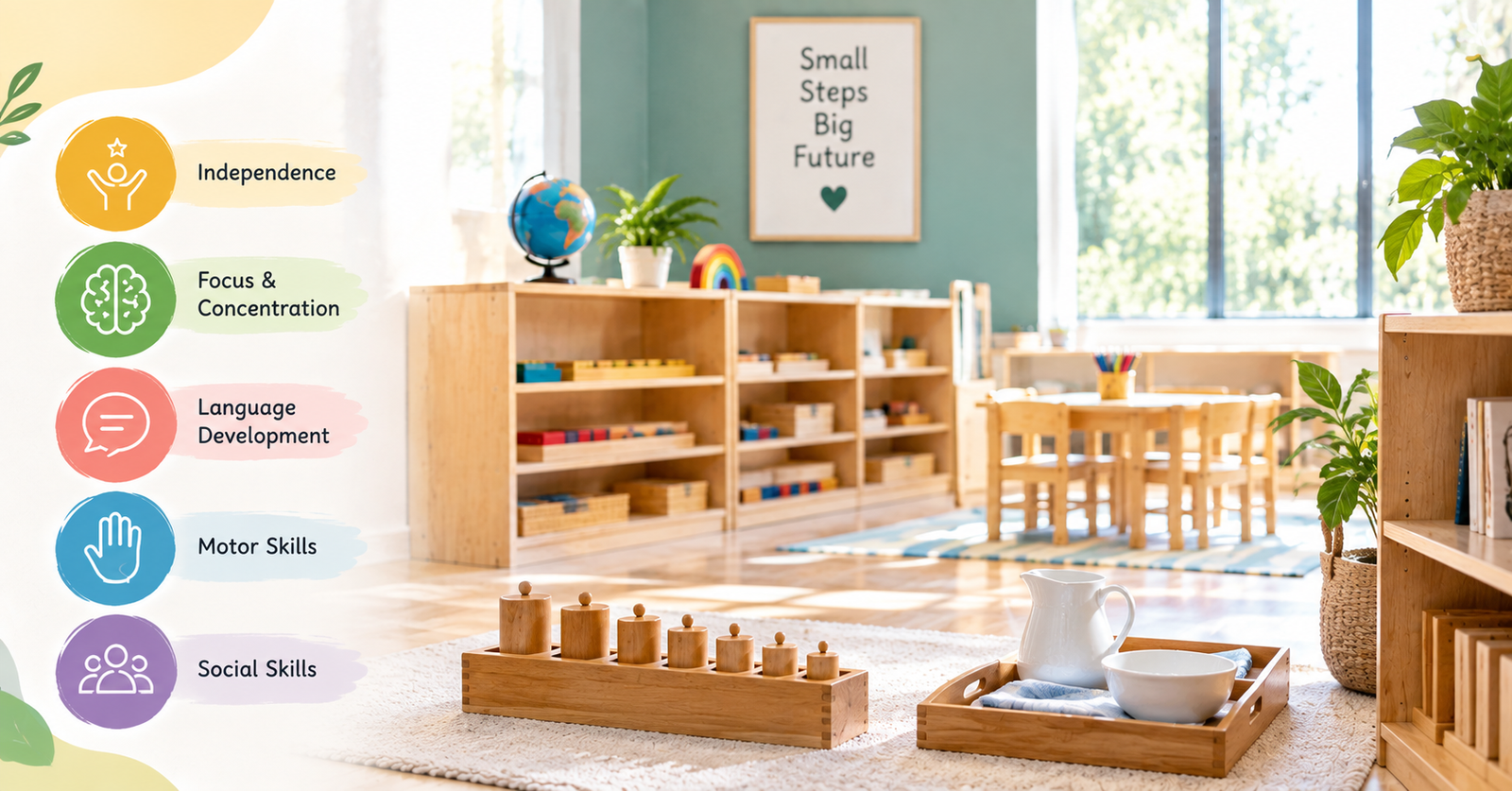
Your child learns to do things alone. They pour their own snacks. They wash their own hands. They put materials away after use. These aren’t small wins. A child who manages simple tasks at two years old carries that confidence forward. You will see it show up later too, in school and at home.
Nobody tells your child what to do every few minutes. They choose from a shelf of activities. This freedom comes with clear limits. Your child learns to stick with one task until it’s done. We notice something clearly: kids who start this young focus longer once they move into primary classrooms.
Pre-primary rooms are full of language. Teachers name objects the right way. They read every day. They talk through each activity as your child works. This steady exposure grows vocabulary faster than settings where talk is mostly instructions and correction.
Materials like spooning trays and simple puzzles build the small hand muscles your child will need for writing later. Movement is part of the day too. Your child isn’t forced to sit still for long stretches.
Mixed-age classrooms let your toddler watch older kids. They see how to say please. They see how to wait their turn. They see how to help a friend. This kind of learning from peers often works better than direct instruction at this age.
None of this happens by luck. It depends on how well the teacher understands early childhood. Montessori training teaches teachers to watch first, not jump in right away. They learn to spot deep concentration and leave it alone. They learn to change the room as the group’s needs change.
A teacher without this training might see a child repeat one task ten times and think it’s boredom. A trained teacher sees it differently. They know this repetition means mastery is happening. This lack of understanding is a barrier between a true Montessori classroom and one that looks like it!
After your child outgrows the toddler years, the next phase in their education may be Montessori kindergarten. This is typically for kids 5–6 years old. This stage builds directly on what came before. Independence turns into leadership, as older kids guide younger ones in mixed-age rooms. The focus they built earlier now supports longer, harder work. Think early reading, hands-on math, and group projects.
Many parents notice how smooth this move feels. Your child already knows how to pick work, finish it, and put it away. These small skills make the shift to more structured learning much less stressful.
Most toddlers take to this style of learning well. It matches how young kids naturally want to explore, through touch, repetition, and freedom. But the classroom’s quality matters more than the label on the door. A room full of Montessori materials means little without a trained teacher and real uninterrupted work time.
When you look at schools, ask direct questions. How long is the daily work period? How are teachers trained? Are kids grouped by age or mixed? The answers tell you more than the word “Montessori” printed on a sign.
We have run Montessori classrooms since 1998. This is 25 years of experience working with children from 18 months to 6 years. We use recognised Montessori teaching methods in our pre-primary programme. We achieve this not only by decorating our classrooms but also by keeping them calm, orderly and truly child-centred. Families who make regular visits report that ‘the children are settled and engaged’ even for their brief visits. That comes from trained teachers and a room built around real developmental needs. Looking to check it out for yourself? You can book a tour through New Horizons Montessori.
Your child gets more than a head start on school prep in a pre-primary Montessori classroom. It builds independence. It builds focus. It builds confidence, right at the age when these traits take root. The right classroom, guided by trained teachers, turns everyday tasks into real growth. This development continues into children’s kindergarten and beyond. When thinking about which school you want your child to start in, make a call to see the class at least once. Don’t just read about the philosophy behind it.
Discover how we help children develop skills and attributes that are important for future happiness and success.
Come visit us and learn more.
Book A TourVisit the school | Meet the team | Let us get to know you and your child
Partner with educators | Be involved | See your child grow
Skills for today and tomorrow | Happiness and success for life